|
NEXT LUNCHEON MEETING
| |
DATE: |
THURSDAY,
28 SEPTEMBER 2017 |
| |
TIME: |
11:30AM - 1:30PM |
| |
MEETING PLACE: |
University Club
Alumni Room
1332 Santa Barbara Street
Santa Barbara, California |
| |
SPEAKER: |
Dr. Anabel Ford,
President, Exploring Solutions Past ~ The Maya Forest Alliance
Director, ISBER/MesoAmerican Research Center, UCSB
Topic: Mapping trees at El Pilar: The Maya Forest as a Garden. |
| |
Please bring a plant for the plant exchange! |
|
| |
ACTIVE DAY MEETING
|
| |
DATE: |
THURSDAY,
14 SEPTEMBER
2017 |
| |
TIME: |
9:00 am - 11:30 am |
| |
MEETING PLACE: |
Erik Thorlaksson's house |
| |
ACTIVITY: |
repotting |
| |
Call Erik at (805) 705-5103 to R.S.V.P.
(for lunch). |
|
PAST MEETING SPEAKER: Janet Reineck
TOPIC: Rwanda: Rising from the Ashes. |

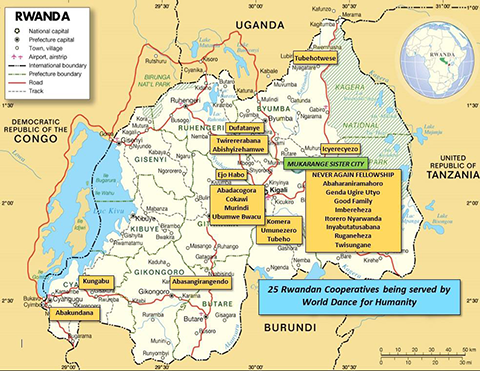
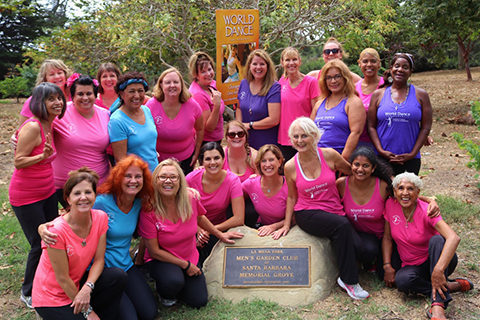
World Dance for Humanity is a Santa Barbara-based non-profit helping 8,400 people in 25 Rwandan communities lift themselves out of poverty through donations of livestock (goats, cows, and chickens), student stipends, training (in agriculture, leadership, and business) and support to help each community create a sustainable community-run business enterprise. We heard from the group’s founder, Janet Reineck, who showed videos about her work in Rwanda. She also talked about the upcoming Permagarden pilot projects in these communities. Janet holds a Masters in Dance Ethnology from UCLA and a PhD in Anthropology from UC Berkeley. She has worked in humanitarian aid for 20 years, leading rural development projects for Oxfam and International Rescue Committee in Kosovo, and serving with Direct Relief International and the National Disaster Search Dog Foundation. In 2010, she set out to combine her areas of expertise, and started a dance class in Santa Barbara which offers participants a chance to connect with other cultures through music and movement, while helping people in need. Unlike many charities, WD4H works from the inside out, giving the Rwandans a chance to “own their change” by supporting the projects that they themselves envision and plan.

They offer 5 dance classes per week for women of all ages and backgrounds, including wheelchair-bound seniors, disabled adults, and the homeless. All class proceeds go to Rwanda.
They have formed a partnership with the Westside Boys & Girls Club, where they offer after school turoring, club scholarships, and Rwandan student sponsorship.
They serve 8,400 people in 25 cooperatives. Their programs include:
- Agriculture — Livestock and Farming
- Education — 150 Sponsored Students
- Training — In Leadership, Business, Agriculture
- Businesses — Bakeries, Sewing, Tilapia Farming...
- Community Support — Solar Lights, Mattresses, Health
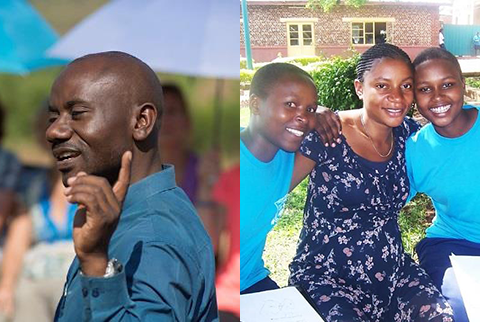
The Rwanda Team includes the Program Director, Justing Bisengimana, Education Coordinator, Chantal Kubwimana, Program Assistant, Dany Rukundo, and Business Coordinator, Judy Rwibutso.
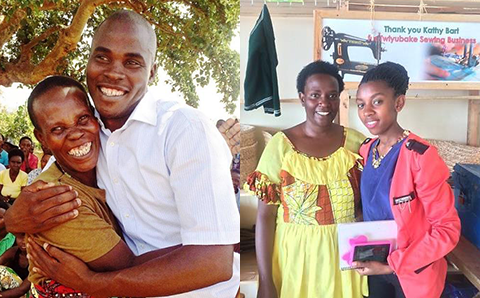
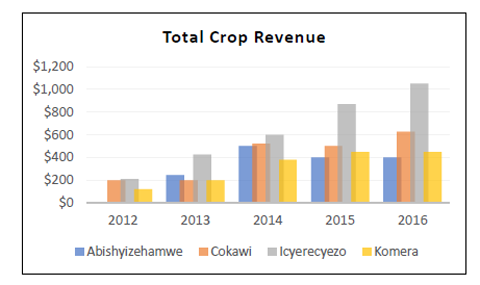
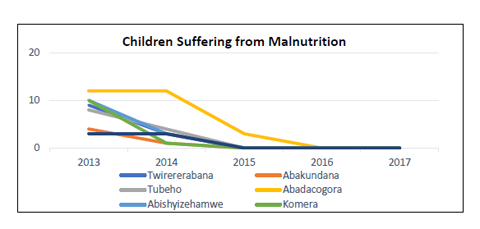
Their impact has been significant, as indicated in the following graphs:.
|
Agriculture in Rwanda.
- 90% of the Rwandan population survives on subsistence farming
- Crops: millet, soy, corn, cassava, beans, onions, cabbage, peppers, tomatoes, and carrots
- 9 months of rain (Oct - May), 3 months of bone-dry summer
- extensive soil erosion from:
- Population density and over-cultivation of the land without adequate fertilizing
- Overgrazing, often on steep slopes
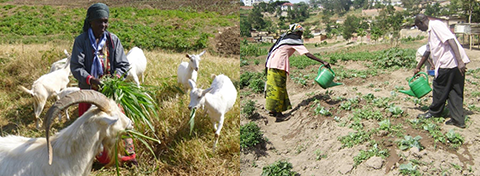
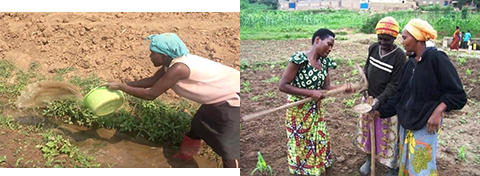
The Permagarden Project — Starting October 2017
Led by Thomas Cole

- 25 years in sustainable agriculture, community development, and humanitarian response work
- 10 years in sub-Saharan Africa
- Developed a "Permagarden" methodology with Warren Bush (Carpinteria)
- Recently published the Permagarden Training Manual for the U.S. Agency for International Development (USAID)
Permagarden instructors start by asking:
What does ut take to grow healthy children?
They teach people to apply these ideas to their plants.
Permagarden Basics:
- Taking advantage of available water, creating soil "water banks" to collect and distribute water, developing rehydration strategies
- Using easily obtained local resources to feed the soil
- A sequential planting of diverse crops, so the sections of esch crop ripen at different times
- Starting in small gardens to get the hang of it, then expanding the methodology to larger fields
- Designed to work in wet and dry seasons
- A simple solution that can bring resillience to each household, one small adjustment at a time
Water" "Stop, Slow, Sink, Spread"
Using all available water to its best advantage, through:
- Rainwater collection and utilization
- Surface water management
- Water retention with mulch
- Household wastewater management
- Understanding the contour of the land
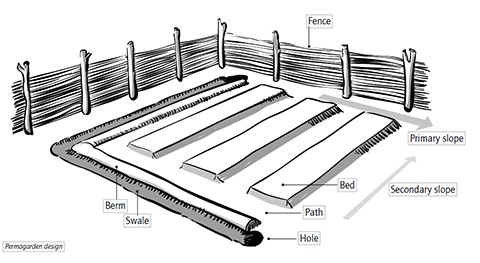
- Swales, berms, and holes
Bio-Intensive Planting
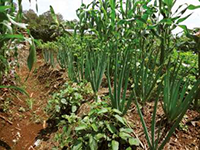
- Triangular plant space
- Crop Rotation - leaf then fruit then root then legume
- Intercropping - different types of plants in the same space
- Staggered plantings - planting new crops right after one is harvested, planting multiple crops with different maturity dates in the same space, planting crops at staggered dates to harvest at different times
- Natural fertilizer (such as manure tea)
- Natural pest control
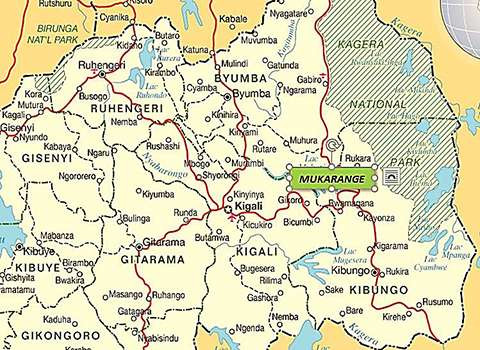
Rwanda Permagarden Pilot Project: "Sydney's Seed"
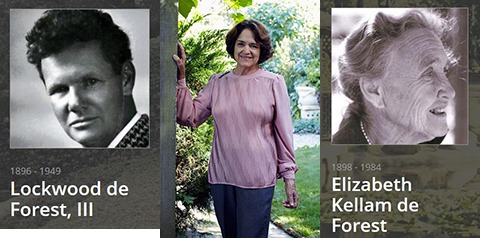
Honoring Master Gardener Sydney Baumgartner
Protege, neice-in-law, and friend of Elizabeth de Forest, wife of Lockwood de Forest.
Want to get involved?
Santa Barbara — Rwanda Sister City
Rwanda Trip Summer 2019
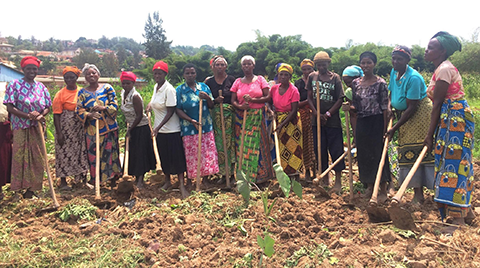
Biracyaza. Onward.
Submitted by
Ray Kolbe
|
